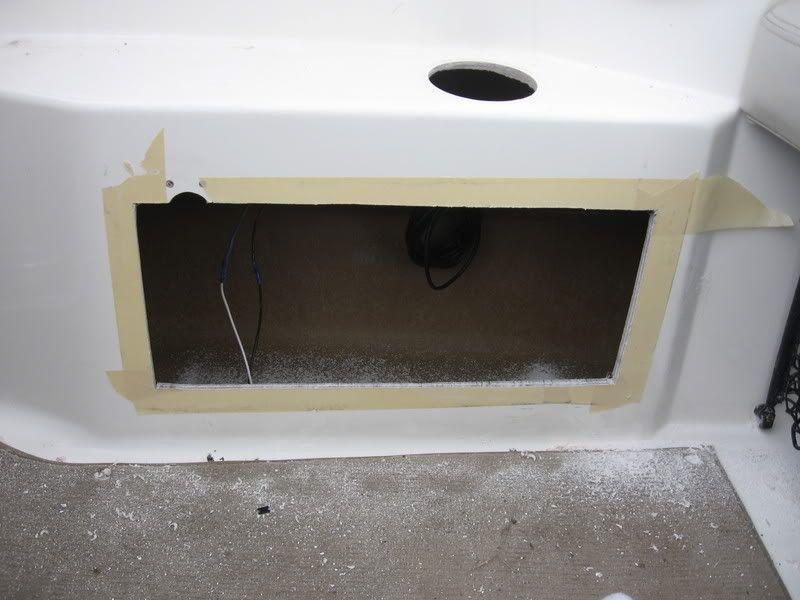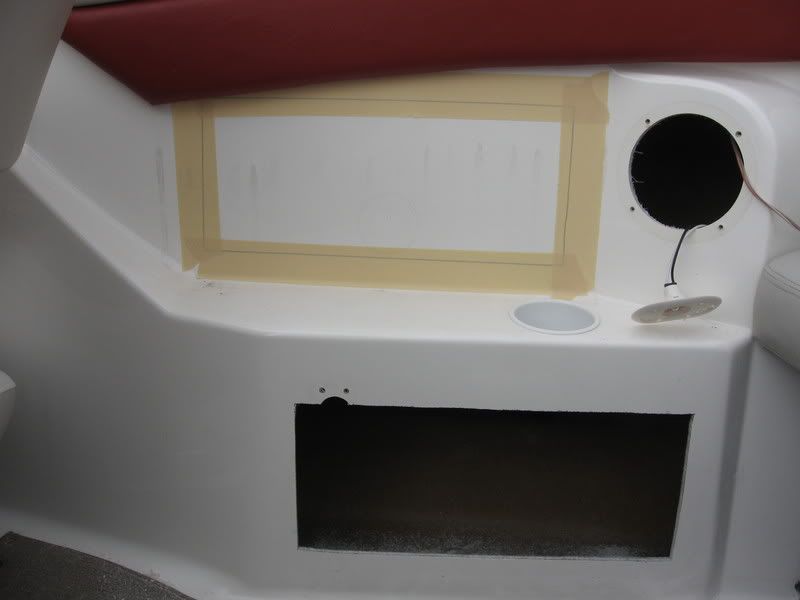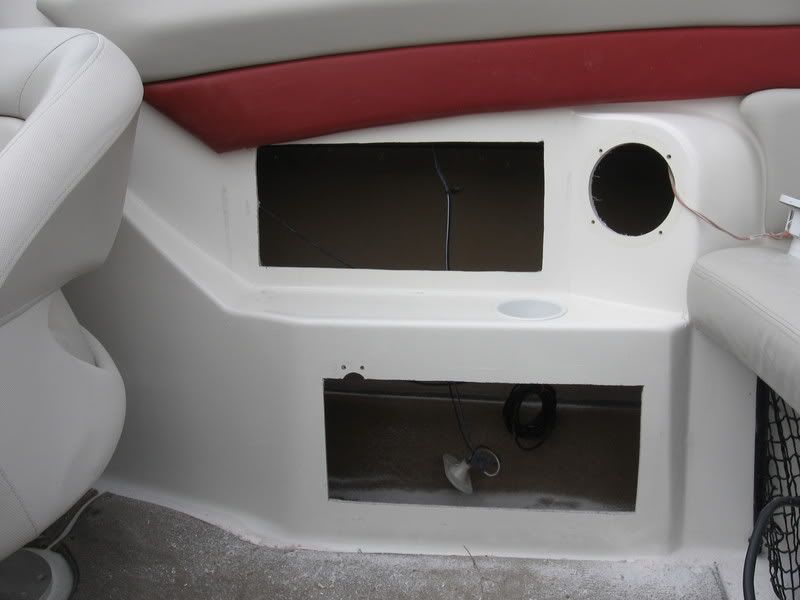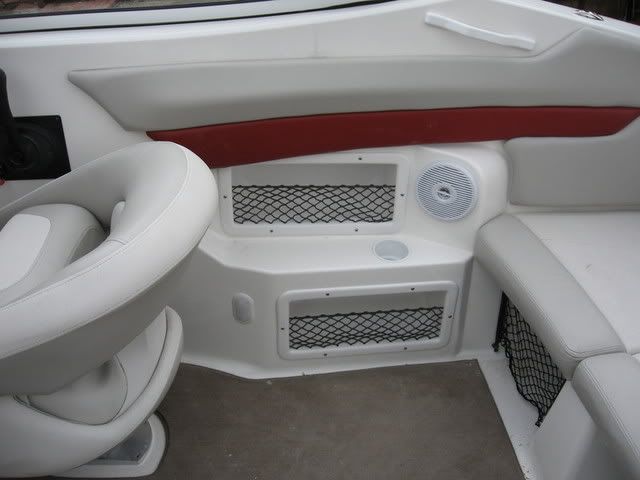
Cutting a Speaker hole.

airbus

Member
exMember
Joined
Sep 7, 2007
RO Number
28518
Messages
270
Next week, I will attempt to cut a hole on my cockpit area for some additional speakers.

What is the best jigsaw blade to use? Are there some that are made for fiberglass?

Is is best to tape along the cut line to avoid chipping the gelcoat. This is what I fear the most.

What are my precautions I should watch out for?
 
I've had good luck with a carbide blade made for ceramic tile. It works more like a file than a saw. However if you have wood behind the fiberglass it'll be slow going.

Tape would help. It might not do much for chipping but it'll keep the saw base from scratching the fiberglass, which is probably more important.
 
as willie said, chipping isn't a big deal since flanges extend way beyong the cut. I use blue tape to protect the surrounding area from getting scratched by the saw base.
 
Holes saws come in sizes that allow you to cut a whole for speakers. I borrowed one from a friend who was a builder. Covered the surrounding area with masking tape, ran the hole saw (Reversable drill) in reverse until cut starte. Then switch to forward and let saw do the work. My friend had hole saw in various sizes all the way up to 8 inches.
 
quote:

Originally posted by Flatsflyer

Holes saws come in sizes that allow you to cut a whole for speakers. I borrowed one from a friend who was a builder. Covered the surrounding area with masking tape, ran the hole saw (Reversable drill) in reverse until cut starte. Then switch to forward and let saw do the work. My friend had hole saw in various sizes all the way up to 8 inches.


I cut in 2 at 6" with this method and I cut 2 at 6" with my Dremel. The hole saw was much faster, much cleaner edge and left a fraction of the mess to deal with. I didn't have a friend with a bit so I had to run to home Depot to buy one.

On the bridge, I made several cuts to flush mount new electronics using a jigsaw. I used a medium bi-metal cutting blade and cleaned up the corners with a fine bi-metal blade. I have a variable speed jigsaw and got a cleaner cut with the highest speed setting. I'm sure there is a better blade to use because it was slow going. I was happy with the results in the end though.

Edited to add: I also used the blue tape Pascal described. I put all my guide marks on the tape directly. When I did the second set of 6" holes, I made, had, begged the Admiral hold the shop-vac near my work and there was literally no clean up required.
 
Definitely use the blue tape. It will prevent scratching of the gelcoat by the tool base as well as some chipping. I've done this job 3 times and never used a jigsaw or hole saw. I used a Dremel tool once and a RotoZip twice. Definitely found the RotoZip worth the money but if you don't want to buy a new "cool tool" then go with the hole saw. Just take your time and let the hole saw do it's thing. Don't "push" it or you'll generate too much heat which will destroy the hole saw or, worse, burn the material you are cutting. Check to see what's behind the fiberglass section you are cutting (plywood base, wires, etc) to make certain that the saw will cut deep enough and not cut anything you don't want cut. Either method you use it's not difficult. Just take your time.
 
I used a RotoZip and found out that if you don't use the right bit it will kind of melt the fiberglass instead of a nice, clean cut. Once I put in the right bit it was easy.
Jim
 
After you cut the hole, if there is any wood coring, make sure you seal the wood with epoxy resin to prevent moisture intrusion.
 
What they said. I've used the blue taps too, and I've covered quite a large area so the saw base was always on tape. No scratching. And as they said as well, be careful to know exactly what is behind the area you are cutting into, so that you don't cut something you don't want to.
 
I've used a roto-zip and while it does a smooth job, I found it hard to control. The jigsaw with the carbide blade is easier (for me) to handle.
 
The smaller and more teeth the better for fiberglass.
I used a rotozip tool and blue tape. You just have to
go slow or you can cut all over the place.
 
If you use a sabre saw, try to find bi-metal reverse(downward)-cutting blades that will not chip the exposed side of the gelcoat and will last much longer than non bi-metal. You just need to apply a bit more downward pressure on the saw for good base contact. Sabre scroll-saws with revolving head are handier for tight spaces.
 
I used one of these last year to cut a 6" hole in my cockpit. Not sure if you were talking about a round hole or not.

malco_1.jpg


I used tape and there was absolutely no chipping at all. Just drill a pilot hole for the center pivot poing, attach your drill to the bit (included) and cut a circle.
 
I have one of those. I use it to cut round holes in sheet metal for a/c duct work.
 
Yup, that's what I bought mine for too. They are cheap and can be found at your local mega home supply store.
 
Thanks everyone for the advice.

I think I'll take a shot at the job with a jigsaw (Already have a good one), and proper blade.

With the holidays over, I'm getting the bug now for some boat projects. Went out for a short cruise today on Lake Norman,and the bug got even worse. Beautiful day today.

45 degrees, almost no wind, and the entire lake to ourselves.

AB
 
If you haven't started the job yet, be sure you can get all the way around the hole with the jig saw. Sometimes there are obstructions that can block the body of the saw so you can't complete the cut.

As for tape for scratch protection, I use a slightly different method. I tape the foot of the saw instead of the work piece. Saves tape, and provides protection over a number of jobs.
 
quote:

Originally posted by b_arrington

If you haven't started the job yet, be sure you can get all the way around the hole with the jig saw. Sometimes there are obstructions that can block the body of the saw so you can't complete the cut.

As for tape for scratch protection, I use a slightly different method. I tape the foot of the saw instead of the work piece. Saves tape, and provides protection over a number of jobs.


No, I haven't done it yet. Great idea.

My jigsaw has a blade that will rotate, just for the reason you stated.

Sounds like maybe good advice to do a dry run without a blade first. Somewhat of a plan B4 I start cutting.

Thanks again.
 
You'll also need some liquid encouragement before cutting any HOLES in your boat (have a beer or two before you start!). Tape it off, for sure. I used a jig saw with a metal blade, and it worked well.

IMG_1036.jpg


IMG_1037.jpg


IMG_1039.jpg


IMG_1043.jpg


And, the finished product:
IMG_1055.jpg
 
quote:

Originally posted by blouderback

You'll also need some liquid encouragement before cutting any HOLES in your boat (have a beer or two before you start!). Tape it off, for sure. I used a jig saw with a metal blade, and it worked well.

IMG_1036.jpg


IMG_1037.jpg


IMG_1039.jpg


IMG_1043.jpg


And, the finished product:
IMG_1055.jpg


Bob, I would Absolutly not recomend beer before this project, The key word being Absolute!!!! It is much better then beer!
 
Back
Top